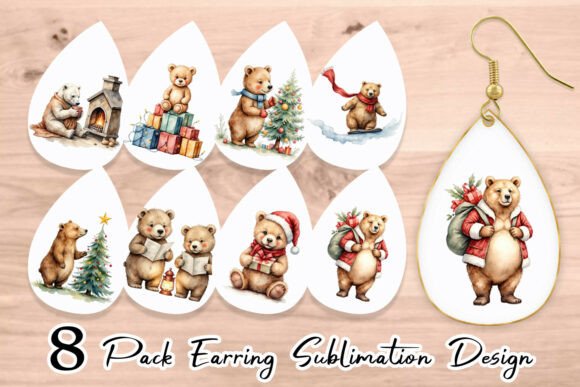
Earring Cozy Christmas Bears: A Designer Review
As a designer who has spent years navigating the delicate balance between digital art and physical thread, I approach every new machine embroidery design with a critical eye. When I first opened the file for Earring Cozy Christmas Bears, my immediate goal was to determine if this illustration could translate from a screen into a high-quality finished product. The holiday season is a peak time for craft businesses, and the difference between a bestseller and a return often lies in the quality of the design assets used. This review breaks down how this specific design performs in real-world scenarios, moving beyond simple descriptions to practical application.
First Impressions: Mood and Visual Personality
The Earring Cozy Christmas Bears design immediately evokes a sense of warmth and nostalgia. Unlike many generic holiday graphics that rely on sharp angles or overly complex details, this piece leans into soft curves and a charming aesthetic. In the Illustrations category, this is crucial because it dictates how the design interacts with fabric. The layout suggests a balanced composition where the bears appear snug and content, likely wearing festive accessories that add just enough visual interest without overwhelming the stitch count.
From a design perspective, the visual personality here is perfect for creating an emotional connection with customers. It feels less like a mass-produced logo and more like a personalized gift idea. The shapes are distinct, which is promising for embroidery clarity. However, the true test of any design is not how it looks on a monitor, but how it behaves when pulled through a hoop and stitched onto textured material. My initial assessment is that this design has strong potential for custom apparel and home decor, provided the execution respects the limitations of the medium.
Real-World Application: Where It Shines
Imagine you are preparing a line of holiday embroidery products for your Etsy shop or local craft fair. You need something that stands out on a white sweatshirt or a canvas tote bag. The Earring Cozy Christmas Bears design fits naturally into these contexts. On a sweatshirt embroidery project, the softness of the bears complements the fleece texture, creating a cozy, tactile experience for the customer. The design is substantial enough to be the focal point of a tote bag design without looking lost, yet compact enough to fit on a smaller item like a cap or an apron pocket.
I also see significant potential for baby embroidery. Parents love soft, non-threatening characters for nursery decor or onesies. If you were creating a personalized gift set, such as a pillow cover or a blanket corner, this design would add a touch of whimsy that feels handmade and thoughtful. For the small shop product owner, using a design with this level of charm can elevate the perceived value of your merchandise. It signals care and attention to detail, which builds customer trust and encourages repeat business. The design works well as a standalone statement or as part of a larger collection of commercial embroidery assets.
Stitching Clarity and Fabric Interaction
When evaluating the technical aspects, we must consider how the fill stitch and satin stitch areas will render. Designs with rounded edges, like the ears and faces of these bears, require precise digitizing to prevent jagged lines or puckering. In a real embroidery project, I would expect the stitch density to be moderate, allowing the fabric to breathe while maintaining definition. If the density is too high, especially on stretchy fabrics, the finished item might warp after washing. Conversely, if it is too low, the colors may show through the backing, reducing the vibrancy of the thread colors.
For dark fabric applications, the contrast becomes key. The design should be tested with a light-colored thread palette to ensure the details pop against a black or navy background. If you plan to use this for personalized gifts on denim or dark flannel, a stabilizer is non-negotiable. Without proper support, the intricate details of the bears' features could blur, ruining the professional look of the handmade product.
Cautions and Limitations to Consider
While Earring Cozy Christmas Bears is versatile, it is not without its challenges. One area requiring careful attention is the use of small hoop sizes. If you attempt to stitch this design in a 4x4 inch hoop on a thin fabric, you risk distortion. The design needs room to settle; cramming it into a tight space can cause the threads to pull unevenly, leading to a messy finished product.
Additionally, avoid using this design on highly textured fabrics like heavy corduroy or thick wool without testing first. The texture can interfere with the needle's ability to catch the thread correctly, resulting in skipped stitches or uneven coverage. For curved surfaces like caps, the placement is critical. Placing the design across the curve of a brim can stretch the image, making the bears look distorted. It is safer to place it flat on the front panel or adjust the digitizing to account for the curvature.
Another consideration is the frequency of washing. If you are selling custom apparel that will go through industrial laundry cycles, check the durability of the stitching. Dense areas might pill over time if the wrong stabilizer is used. Always advise your customers on care instructions to maintain the integrity of the embroidered patch or garment.
Practical Designer Notes for Success
To get the most out of Earring Cozy Christmas Bears, follow these practical steps before committing to a full production run:
- Test on Scrap Fabric: Never skip this step. Stitch the design on a scrap piece of the actual fabric you plan to use. Check for puckering, thread breaks, and color accuracy.
- Check Thread Color Contrast: Ensure the thread colors stand out against the fabric background. Test both light and dark combinations to see which offers better visual appeal.
- Review Stitch Density: Inspect the back of the test stitch. If there are large gaps or excessive buildup, the digitizing may need adjustment.
- Confirm Hoop Size: Verify that your hoop accommodates the design dimensions comfortably. Do not force a design into a hoop that is too small.
- Inspect Small Details: Zoom in on the eyes, noses, and accessories. Tiny details can easily get lost or become tangled if the stitch length is incorrect.
- Use Proper Stabilizer: Select a stabilizer appropriate for your fabric type. Cut-away stabilizers are often best for knits, while tear-away works for wovens.
- Test in Black and White Mockups: Before finalizing your printable mockup, view the design in grayscale to ensure the tonal values work without relying solely on color.
- Verify Licensing: As a digital product seller or Etsy seller, always confirm the licensing terms. Ensure you have the right to sell finished items or use the design in commercial projects.
Final Verdict on Commercial Viability
In conclusion, Earring Cozy Christmas Bears is a strong contender for your holiday collection. It offers the right blend of charm and technical feasibility for a variety of embroidery projects. Whether you are creating personalized gifts for family, stocking up inventory for a boutique, or offering custom designs for clients, this asset has the potential to enhance your brand consistency and buyer engagement.
The key to success lies in preparation. By taking the time to test the design, choose the right materials, and respect the limitations of the machine and fabric, you can turn this digital file into a tangible, high-quality product. For designers and makers looking to add a touch of festive magic to their portfolio, this design delivers a warm, professional result that customers will appreciate. Just remember to check the specific file details, such as stitch count and format compatibility, before downloading, and you will be well on your way to a successful holiday season.