Review: Quirky Christmas Highland Cow Clipart for Stitchers
As a designer who has spent countless hours staring at digitized files and watching needles punch through fabric, I have learned that not every cute graphic translates well into thread. When I first opened the Quirky Christmas Highland Cow Clipart, my initial reaction was one of cautious optimism. The whimsical nature of the subject matter—a shaggy, festive bovine—is undeniably charming, but charm alone does not make a viable embroidery project. I needed to know if this design could hold up under the mechanical stress of a machine and the aesthetic scrutiny of a paying customer.
In the world of Illustrations meant for textile application, simplicity is often king. This particular design strikes a balance between personality and practicality. It does not rely on excessive micro-details that would likely break or bunch up during stitching. Instead, it offers bold shapes and clear lines, which are essential for maintaining clarity in a finished product. For those of us running a craft business or selling as an Etsy seller, this distinction is critical. A design might look perfect on a screen, but if it turns into a muddy mess on a towel, it hurts brand reputation.
Real-World Application: The Holiday Tote Test
To truly evaluate the Quirky Christmas Highland Cow Clipart, I moved beyond digital mockups and prepared a real-world test. I chose a heavy-weight canvas tote bag, a popular item for holiday gifting and grocery runs. The goal was to create a tote bag design that felt premium yet playful. I hooped the fabric with a medium-cut stabilizer to ensure the weave remained stable under the needle.
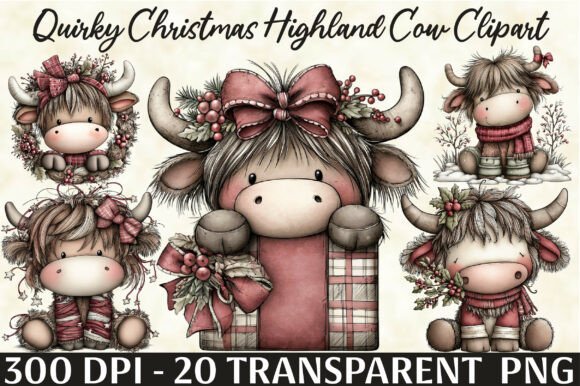
The stitching process revealed the design’s strengths. The outline work, likely utilizing a running stitch or a light satin stitch depending on the specific digitization, provided a clean boundary that prevented the fill areas from spreading. The highland cow’s distinctive horns and shaggy fur were represented with enough texture to be recognizable without becoming a dense block of thread. This is where many machine embroidery design files fail; they over-complicate fur textures. Here, the abstraction worked in our favor. The result was a crisp, cheerful image that popped against the natural canvas background.
Versatility Across Product Lines
One of the most valuable aspects of this clipart is its adaptability. While it worked beautifully on the tote, I can easily envision it thriving in other categories. For sweatshirt embroidery, the design’s scale can be increased to serve as a central chest piece or a smaller left-chest logo. The whimsical theme fits perfectly with the cozy, relaxed vibe of winter apparel. Similarly, for baby embroidery, such as on onesies or burp cloths, the soft, rounded edges of the character feel safe and appealing to parents looking for a personalized gift.
However, context matters. If you are creating an embroidered patch, you must consider the edge finishing. The irregular shape of the cow’s fur might require careful trimming or a merrowed edge if you are cutting it out. For holiday embroidery on kitchen towels, the design adds a touch of humor that traditional snowflakes lack. It appeals to a modern buyer who wants festivity without cliché. As a small shop product, it differentiates your inventory from the sea of generic red and green motifs.
Navigating Technical Challenges
Despite its appeal, there are areas where the Quirky Christmas Highland Cow Clipart requires careful handling. If you plan to use this on stretchy fabrics like jersey knits for t-shirts, proper stabilization is non-negotiable. Without it, the stitch density—even if moderate—can cause puckering. I also advise caution when using this on dark fabrics. If the design relies on light thread colors for the cow’s face or highlights, you may need to adjust the underlay or use a white base layer to ensure visibility. Otherwise, the details may get lost in the shadow of the fabric.
Curved surfaces present another challenge. Applying this to a cap or hat requires checking the hoop size compatibility. If the design is too wide, it may distort around the curve of the crown. Always check the dimensions of the embroidery file before purchasing or downloading. Additionally, avoid placing intricate parts of the design near seams or zippers, as the machine foot may struggle to navigate these obstacles, leading to skipped stitches or misalignment.
Enhancing Brand Value and Customer Trust
From a business perspective, the quality of your design assets directly impacts perceived value. A clean, well-digitized image signals professionalism. When customers see a handmade product with crisp stitching and no loose threads, they trust the maker. The Quirky Christmas Highland Cow Clipart, when executed correctly, contributes to this trust. It shows that you have selected high-quality Illustrations and taken the time to produce them well.
For commercial embroidery projects, consistency is key. If you are producing a batch of items for a boutique client, ensure that your thread tension and color choices remain uniform. This design works well for printable mockup previews as well, allowing you to showcase the product online before stitching a single thread. This saves time and materials, crucial for maintaining profitability in a custom apparel business.
Practical Notes for Designers
Before you commit to a large production run, follow these steps:
- Test on Scrap Fabric: Always stitch a sample on the exact material you intend to use. This reveals issues with tension and stabilizer choice.
- Check Thread Contrast: Ensure your thread colors stand out against the fabric. High contrast improves readability from a distance.
- Review Stitch Density: If the file allows, inspect the density settings. Too dense, and the fabric will pucker; too sparse, and the backing will show through.
- Confirm Licensing: Verify whether the digital embroidery file includes commercial rights. Never assume you can sell finished items without explicit permission.
- Mockup in Black and White: This helps you see the structural integrity of the design without the distraction of color.
In conclusion, the Quirky Christmas Highland Cow Clipart is a strong contender for your holiday collection. It balances whimsy with technical feasibility, making it suitable for a wide range of embroidery project types. By respecting the limitations of the medium and preparing your materials correctly, you can transform this digital asset into a tangible, high-value product that delights customers and strengthens your brand. Whether you are decorating a pillow cover or creating a unique apron for a gift, this design offers the charm and clarity needed to succeed in the competitive handmade market.